
 Eng
Eng  English
 русский
 عربى
عربىPeople often see a finished pump and focus on specifications.
Flow rate.
Power.
Discharge capacity.
What is less visible is the manufacturing process behind the product itself.
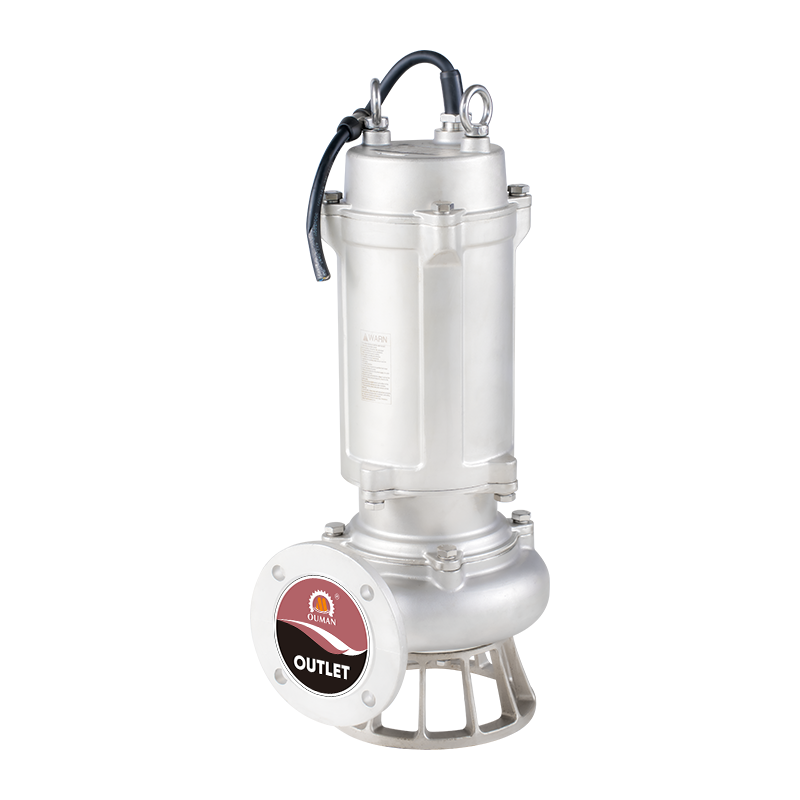
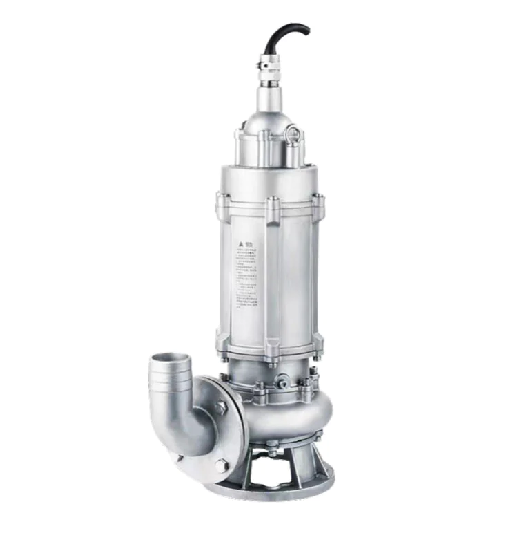
For a stainless steel submersible sewage pump, production involves much more than assembling a motor and an impeller. Material preparation, welding quality, sealing technology, and inspection procedures can all influence how the pump performs after installation.
This is one reason manufacturers pay close attention to production details long before the pump reaches a job site.
Stainless steel selection comes
The manufacturing process usually begins with material selection.
Not all stainless steel grades behave the same way in wastewater environments. Different projects may involve municipal drainage, industrial wastewater, construction sites, or treatment facilities.
As a result, a stainless steel submersible sewage pump often starts with carefully selected raw materials before machining begins.
The goal is not simply to produce a pump body but to create a structure capable of operating in demanding conditions for extended periods.
Machining affects component accuracy
After material preparation, key components enter machining operations.
Pump casings, motor housings, shafts, and impeller components require dimensional accuracy before assembly.
A stainless steel submersible sewage pump contains multiple rotating and stationary parts working together inside a compact structure. Small dimensional deviations can influence vibration, efficiency, and long-term operation.
For this reason, machining is usually one of the closely monitored stages inside the factory.
Welding quality receives special attention
Unlike some ordinary cast structures, stainless steel products often involve welding operations during production.
This stage can have a significant impact on the finished pump.
Manufacturers typically pay attention to:
- weld consistency
- structural strength
- surface finishing
- deformation control
- corrosion resistance around welded areas
A well-executed weld may attract little attention after production, yet it often contributes to the reliability of a stainless steel submersible sewage pump during daily operation.
Sealing technology is part of the process
One challenge faced by any submersible equipment is keeping water away from sensitive internal components.
Because the motor operates underwater, sealing systems become an important part of production.
During assembly of a stainless steel submersible sewage pump, manufacturers often inspect sealing areas carefully before final installation.
Even a well-machined pump body still depends on proper sealing performance once submerged.
Explosion-proof models require additional procedures
Some applications involve environments where explosion-proof designs are required.
In those cases, manufacturing procedures may include additional verification and inspection steps beyond standard production requirements.
The objective is not only pump performance but also compliance with the intended operating environment.
This is one reason explosion-proof versions of a stainless steel submersible sewage pump may involve different production controls compared with conventional models.
Production comparison
|
Manufacturing Stage |
Standard Pump |
Stainless Steel Submersible Sewage Pump |
|
Material Selection |
Standard materials |
Stainless steel materials |
|
Corrosion Consideration |
Basic |
Higher priority |
|
Welding Operations |
Limited in some designs |
Commonly required |
|
Surface Finishing |
Standard treatment |
Additional attention often needed |
|
Sealing Inspection |
Important |
Critical |
The differences may not always be visible from the outside, but they can influence long-term performance.
Testing happens before shipment
Before leaving the factory, a stainless steel submersible sewage pump typically undergoes inspection and testing procedures.
Manufacturers may evaluate:
- electrical performance
- sealing integrity
- rotation stability
- operational condition
- overall assembly quality
The purpose is straightforward. Problems discovered inside the factory are usually much easier to address than problems discovered after installation.
Manufacturing influences long-term operation
When buyers compare pumps, technical specifications often receive attention.
Yet many of the factors affecting service life are determined much earlier during production.
Material selection, machining accuracy, welding quality, sealing assembly, and inspection procedures all contribute to the finished product.
That is why the manufacturing process of a stainless steel submersible sewage pump remains an important topic for engineers, distributors, and end users alike. The pump seen at the installation site is ultimately the result of countless decisions made on the factory floor long before it ever touches wastewater.