
 Eng
Eng  English
 русский
 عربى
عربىA pump distributor once received an unusual phone call.
The customer had already purchased two pumps from different suppliers. Both worked normally when tested above ground. After installation, however, neither delivered the amount of water expected from the well.
The problem was not the motor.
It was not the power supply.
The real issue was that the pumps had been selected for the wrong application.
Situations like this explain why a deep submersible pump exists as its own category rather than simply being another version of an ordinary submersible pump.
Not every well is actually shallow
People sometimes use the word "well" very loosely.
One project may draw water from a relatively shallow source. Another may require water to travel much farther before reaching the surface.
From above ground, the installations can look similar.
Underground, they can be completely different.
A deep submersible pump is generally designed for situations where lifting water becomes a larger part of the challenge.
The difference is often hidden inside
Place a standard pump and a deep submersible pump side by side and some buyers may struggle to see a major difference immediately.
Much of the distinction is internal.
In many deep-well designs, multiple impellers work together rather than relying on a single stage.
The customer may never see these components after installation, but they play a large role in how water is moved from greater depths.
Why the shape looks different
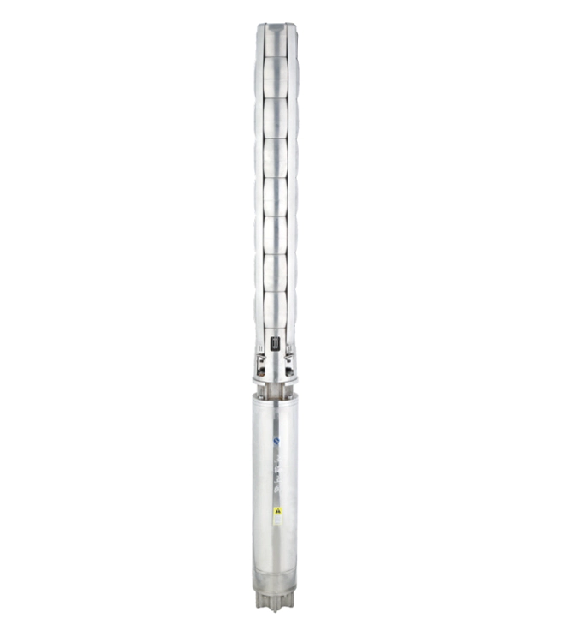
People familiar with drainage pumps are sometimes surprised by the appearance of a deep submersible pump.
Instead of a short, wide body, the structure is often long and narrow.
The reason is practical rather than cosmetic.
Deep wells typically provide limited installation space. The pump must fit inside while still accommodating the components required for higher lifting performance.
Factory attention often focuses on durability
Once installed, a deep-well pump may remain underground for a long time.
Nobody wants to pull equipment out of a well unnecessarily.
Because of this, manufacturers often pay attention to areas such as:
- sealing quality
- shaft stability
- corrosion resistance
- motor protection
- assembly accuracy
These details rarely appear in marketing photographs, yet they often influence long-term operation.
A simple comparison
|
Item |
Ordinary Submersible Pump |
Deep Submersible Pump |
|
Typical Application |
Drainage and transfer |
Deep wells |
|
Pump Structure |
Simpler |
Often multi-stage |
|
Installation Depth |
Lower |
Greater |
|
Pump Body |
Various shapes |
Usually slender |
|
Pressure Requirement |
Moderate |
Higher |
The table makes the categories look similar, but in practice, they are often purchased for very different jobs.
Sometimes the cheaper pump becomes expensive
Many pump professionals have seen this happen.
A buyer selects a pump mainly because the specifications appear close enough.
Installation begins.
Performance falls short.
Then comes the cost of replacement, labor, and downtime.
That experience is one reason project planners often spend extra time evaluating whether a deep submersible pump is actually required before making a purchase decision.
The difference appears after installation
The interesting thing about a deep submersible pump is that much of its value becomes visible only after it starts working.
On a warehouse floor, it may not look dramatically different from other pumps.
Inside a deep well, however, the design features that seemed minor during purchasing often become the reason the system performs as expected.
That is why deep-well pumps continue to occupy their own place within the broader submersible pump market rather than simply being treated as standard pumps with a different name.