
 Eng
Eng  English
 русский
 عربى
عربىIn the global market for fluid handling equipment, the submerged pump price remains a key consideration for buyers across agricultural, industrial, and domestic sectors. Recent analyses of market trends indicate a period of moderate but steady increase, with average price indices for pumping equipment rising by approximately 3% to 5% annually over the past few years. This movement is not uniform and is shaped by a complex interplay of foundational costs, external pressures, and evolving buyer strategies, making a clear understanding of pricing dynamics more crucial than ever.
What Determines the Core Price of a Submersible Pump?
The submerged pump price is fundamentally built upon its type and technical specifications. A basic, low-capacity model for garden pond use may be available for less than a hundred dollars, while a high-head, multi-stage deep well pump constructed from stainless steel can command several thousand dollars. The primary cost drivers within the unit itself are the materials used for the pump housing and impeller, the power and efficiency rating of the sealed motor, and the complexity of the hydraulic design. Industrial-grade pumps designed for abrasive or corrosive fluids incorporate specialized alloys and sealing technologies, which can elevate the submerged pump price by a significant margin compared to standard cast-iron models for clean water. The manufacturing costs of these core components form the baseline from which all other factors exert their influence.
What Factors Influence the Total Cost of Ownership?
Beyond the factory gate, several powerful forces directly impact the final submerged pump price. Global commodity prices for raw materials like copper, used in motor windings, and various grades of steel, used for casings, are a primary volatile element. Supply chain fluctuations and increased freight costs have added logistical premiums to shipped goods. Furthermore, the long-term operational costs are becoming a larger part of the total cost analysis. An energy-efficient pump with a higher initial submerged pump price can cause substantial savings; for instance, selecting a pump that operates just 5% more efficiently can reduce electricity costs by a comparable percentage over its lifespan, which often exceeds a decade. This shift in focus from purchase price to total cost of ownership is reshaping buyer priorities and justifying investments in more advanced, albeit costlier, technologies.
How Should Buyers Acquire and Evaluate Pricing?
For purchasers, navigating the submerged pump price landscape requires a strategic approach. The proliferation of online industrial marketplaces and e-commerce platforms has increased price transparency, allowing for easier comparison of listed prices for standard models. However, for customized or large-scale project pumps, the submerged pump price is almost always determined through a request-for-quotation process, where detailed technical specifications are submitted to multiple suppliers. Savvy buyers now routinely evaluate quotes not just on the unit cost, but on projected energy consumption, warranty terms, and the availability of local service support. This comprehensive evaluation helps in identifying the many economically rational option over the pump's entire service life, rather than merely the option with the low initial ticket price.
The trajectory of the submerged pump price is therefore a reflection of broader economic currents and technological progress. As regulations push for higher energy efficiency and smart, sensor-equipped pumps become more common, the upfront cost may see upward pressure. However, this is concurrently balanced by the long-term value proposition of reduced operational expenses, indicating a market where value and lifecycle performance are increasingly paramount in the assessment of true cost.
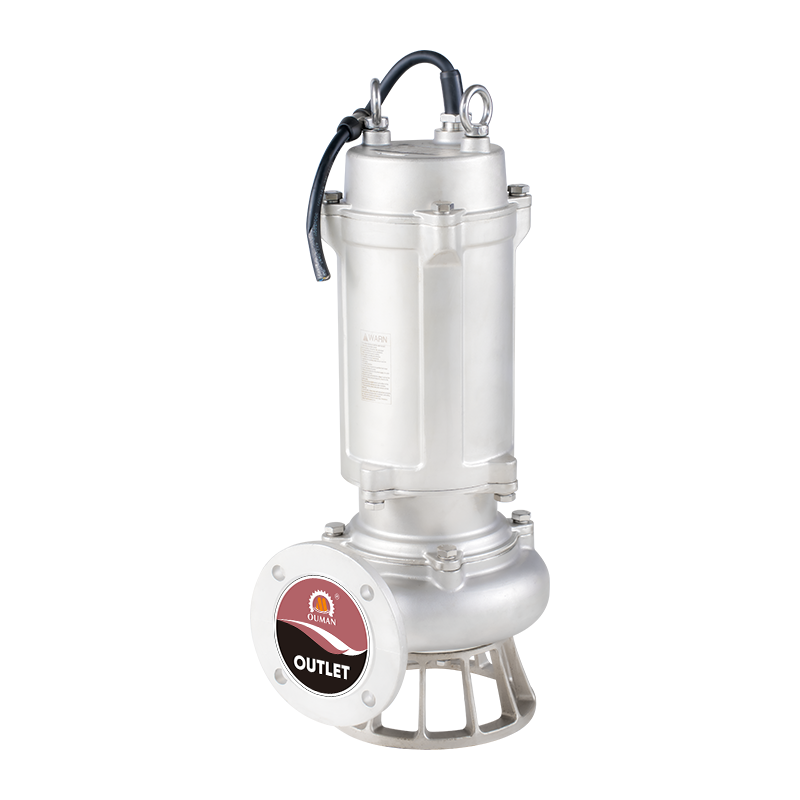
For applications requiring a compact, durable, and corrosion-resistant pumping solution, we recommend the QDX/QX Small Stainless Steel Submersible Pump from OUMAN Mechanical & Electrical Co., Ltd. This pump is constructed with a stainless steel body, providing outstanding resistance to rust and corrosion, making it suitable for clean water supply, small-scale drainage, garden features, and light commercial use. Its submersible design allows for quiet, efficient operation directly in the fluid source. Combining robust construction with reliable performance, this pump is an ideal choice for scenarios where longevity and material integrity in contact with water are key priorities.