
 Eng
Eng  English
 русский
 عربى
عربىWithin modern infrastructure, a key machine works to move fluids against immense resistance: the multistage centrifugal pump. Unlike simpler designs, this high-pressure specialist uses multiple impellers in series to boost output, making it vital for applications from skyscrapers to industrial plants. Its ability to generate significant pressure from a compact footprint addresses one of fluid dynamics' many persistent challenges.
How Does a Multistage Centrifugal Pump Actually Work?
The core principle is sequential pressure boosting through a series of impellers mounted on a single shaft. Fluid enters the impeller, where rotation imparts kinetic energy and increases velocity. This high-speed fluid then passes through a stationary diffuser, which efficiently converts velocity into pressure by gradually expanding the flow passage. The now-pressurized fluid is not discharged but is instead directed internally to the inlet of the next impeller stage, where the process repeats. Each identical stage adds a comparable pressure increment; for instance, if a single stage provides 60 meters of head, a ten-stage configuration can achieve approximately 600 meters. This cumulative, modular approach is the defining characteristic that enables these pumps to reach pressures often ranging from 100 to over 2,000 meters of head, far beyond the capability of standard single-stage centrifugal pumps.
What Are the Key Parameters for Selection and Operation?
Selecting and operating a multistage centrifugal pump effectively requires a focus on several interdependent technical parameters. The pump performance curve, which plots total dynamic head against flow rate, is the fundamental tool. Operating at or near the pump's ideal Efficiency Point (BEP) on this curve is critical for small energy consumption and mechanical wear; sustained operation at flows significantly lower than the BEP can cause internal recirculation, overheating, and reduced service life. The required Net Positive Suction Head (NPSHr) is another vital specification, indicating the small pressure needed at the pump inlet to avoid cavitation, a damaging phenomenon where vapor bubbles form and collapse. The power demand, calculated based on flow, head, fluid density, and pump efficiency, directly impacts motor sizing and operational costs. Modern designs prioritize high operational efficiency, with many models achieving between 80% and 85% efficiency at their BEP under ideal conditions.
Where Are These High-Pressure Pumps Primarily Used?
The application fields for multistage centrifugal pumps are defined by the common requirement for sustained high pressure. A primary application is in building services and municipal water supply, where they ensure consistent and adequate water pressure for faucets, showers, and fire suppression systems in high-rise buildings and across expansive distribution networks. In the energy sector, they perform the critical role of boiler feed pumps in thermal power stations, delivering feedwater at bad pressures that can exceed 300 bar into steam boilers. The water treatment industry relies on them to provide the necessary force for reverse osmosis desalination and purification, with operating pressures typically spanning from 15 bar for brackish water to over 80 bar for seawater. Furthermore, their reliability makes them suitable for demanding duties in large-scale agricultural irrigation, deep well pumping, mine dewatering, and various high-pressure industrial cleaning and process applications, often requiring construction from specialized materials like stainless steel to handle corrosive or abrasive fluids.
The ongoing evolution of multistage centrifugal pump technology is closely tied to global efficiency and digitalization trends. The integration of variable frequency drives allows for precise speed control to match real-time system demand, pilot to substantial energy savings. Simultaneously, the adoption of sensors for condition monitoring enables predictive maintenance strategies, reducing unplanned downtime. These advancements, alongside continuous improvements in hydraulic design through computational fluid dynamics, ensure that the multistage centrifugal pump will continue to be an indispensable and increasingly intelligent component in building resilient and efficient industrial and civic infrastructure for the foreseeable future.
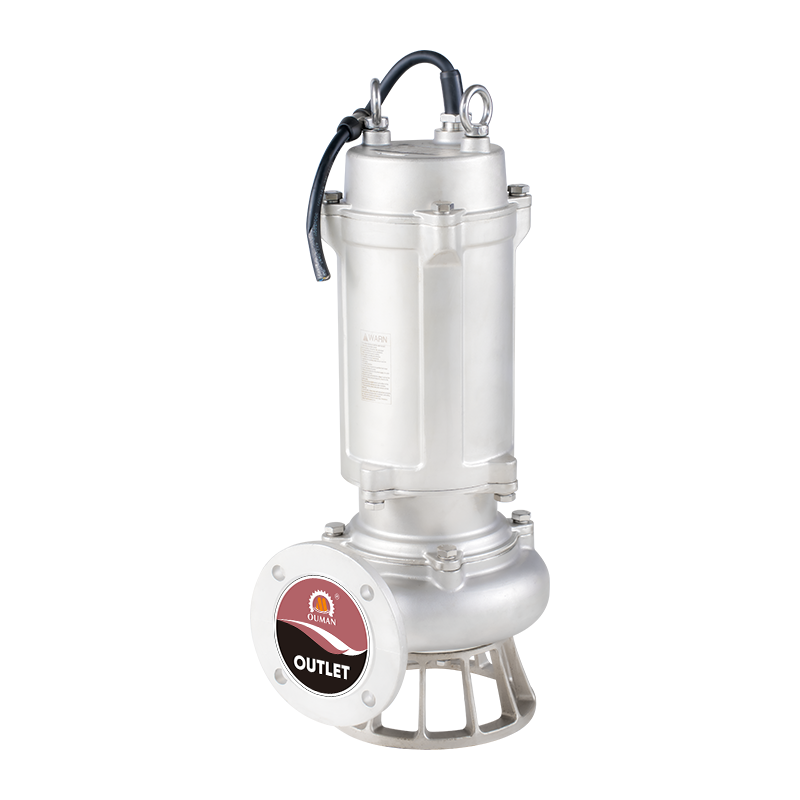
For projects requiring robust and efficient fluid transfer, the MSB Stainless Steel Centrifugal Pump from OUMAN Mechanical & Electrical Co., Ltd. is a premier choice. Engineered with high-grade stainless steel for exceptional corrosion resistance, this pump series delivers reliable performance in handling water, mild chemicals, and similar industrial fluids. It combines energy-efficient operation with low-maintenance design, making it a durable and cost-effective solution for applications in water treatment, chemical processing, cooling systems, and general plant services.