
 Eng
Eng  English
 русский
 عربى
عربىEverything that keeps a Deep Submersible Pump running sits fully underwater for the entire life of the installation, which means components that would get a quick visual check on a surface pump instead have to be engineered to go years without anyone laying eyes on them. Two units built to the same nameplate rating can still perform very differently once they've been down a well for a few seasons, and the gap between them almost always traces back to a handful of sealed, unreachable components rather than anything visible on a spec sheet.
Motor Cooling Depends On Water Actually Moving Past It
A submerged motor relies on the surrounding well water flowing across its outer jacket to carry heat away, rather than on air circulation the way a surface-mounted motor would. Installing a Deep Submersible Pump too close to the bottom of a well, or in a borehole wider than the pump's flow-inducing sleeve was sized for, can starve the motor of that cooling flow even though the unit is fully submerged and appears to be operating normally. A flow-inducing sleeve directs water past the motor housing at the velocity the design actually needs, and getting sleeve diameter matched to the specific borehole size during installation planning is what keeps that cooling margin intact rather than assumed. A Deep Submersible Pump that runs consistently warm from inadequate flow past the motor jacket wears its winding insulation down faster over time, even though nothing about that gradual heat stress shows up as an obvious symptom until the motor eventually fails outright.
Cable Splice Integrity Faces Constant Pressure At Depth
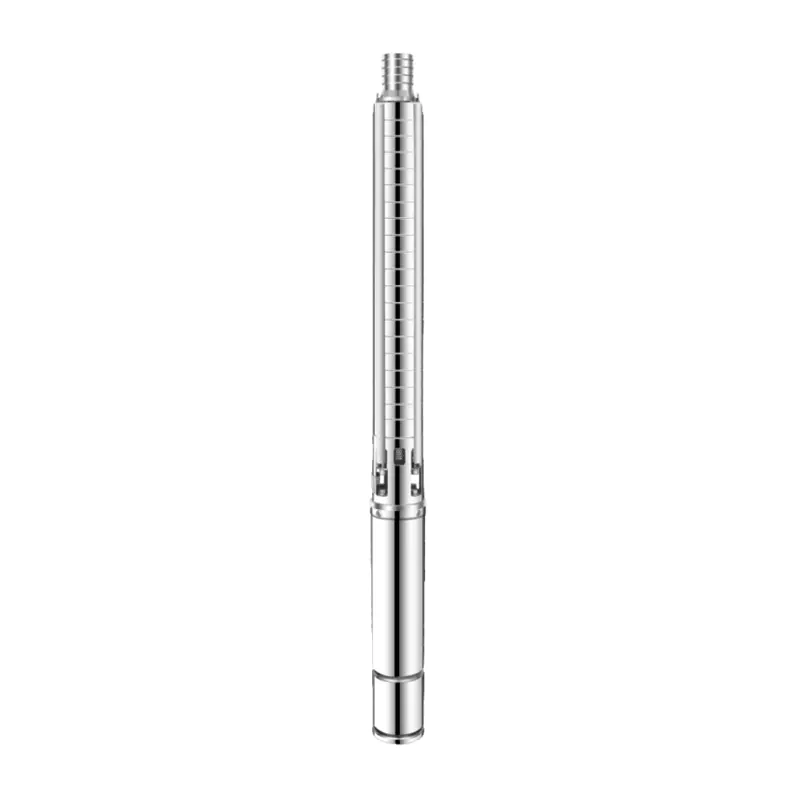
The joint connecting a Deep Submersible Pump's motor to the surface power cable sits under continuous water pressure that increases with installation depth, and that splice has no access point for inspection once the pump goes down the well. A splice sealed with heat-shrink and epoxy encapsulation designed specifically for submerged service holds up differently than a general-purpose electrical splice never rated for sustained hydrostatic pressure, and the difference between the two only becomes obvious after a failure that requires pulling the entire pump string back out of the well to diagnose. Getting this splice built to a submersible-rated standard, rather than treated as a standard wire connection, is what prevents that kind of costly, hard-to-diagnose field failure on equipment that is expensive to pull and re-lower. Quality control on this joint during assembly matters more for a Deep Submersible Pump than for almost any other single connection point in the system, precisely because it's the one component nobody gets to look at again after installation day.
Thrust Bearing Load Increases With Every Added Stage
Each impeller stage in a multistage design adds axial thrust that the pump's thrust bearing has to absorb, since every stage pushes water downward against the shaft in addition to spinning it. A Deep Submersible Pump built with more stages to reach greater depth or higher pressure puts correspondingly more load on that single thrust bearing, which means bearing material and lubrication both need to scale with stage count rather than staying fixed across an entire product range. Bearing wear from underrated thrust capacity on a Deep Submersible Pump shows up as a slow decline in pump efficiency long before it shows up as an outright failure, which is part of why matching bearing spec to stage count matters more as pump depth ratings climb. Development testing across a full range of stage counts, rather than validating bearing performance only at one reference configuration, is what keeps that thrust capacity properly matched across an entire model lineup rather than just the variant that sells in the largest volume.
Motor cooling, cable splice integrity, and thrust bearing capacity all have to hold up without inspection access once a Deep Submersible Pump goes into the well, which is why each gets engineered against years of unattended operation rather than a bench test that only runs for a few hours. A well casing sitting quietly underground gives no early warning before one of these three details finally gives out, which is exactly why each one gets built with a service life measured in years rather than hours from the very start.