
 Eng
 English
 русский
 عربى
A Water Pump Control Cabinet decides how a pump meets the electrical supply and the pipe at the moment it switches on, and that moment puts the heaviest stress on both. The cabinet also protects the motor while it runs and reports what the pump is doing. Which switching method it uses affects power bills, pipe life and how often the pump station needs a visit.
What Happens at Switch-On
Electrical inrush
An induction motor connected straight to the supply draws several times its rated current for a short time while the rotor accelerates. On a large pump, that surge can cause a voltage dip on the supply, trip an upstream breaker or overload a generator at a remote site. The size of the surge grows with motor power, so a pump that runs quietly on a strong grid may cause trouble on a weak rural line.
Hydraulic surge
Water moving in a long pipe has weight and momentum. When a pump suddenly forces it forward, or stops and lets it fall back, the pressure in the line spikes and the pipe, joints and valves take the shock. This effect, called water hammer, shortens the life of pipework and can burst weak fittings. A Water Pump Control Cabinet that brings the motor up to speed gradually spreads that change over several seconds.
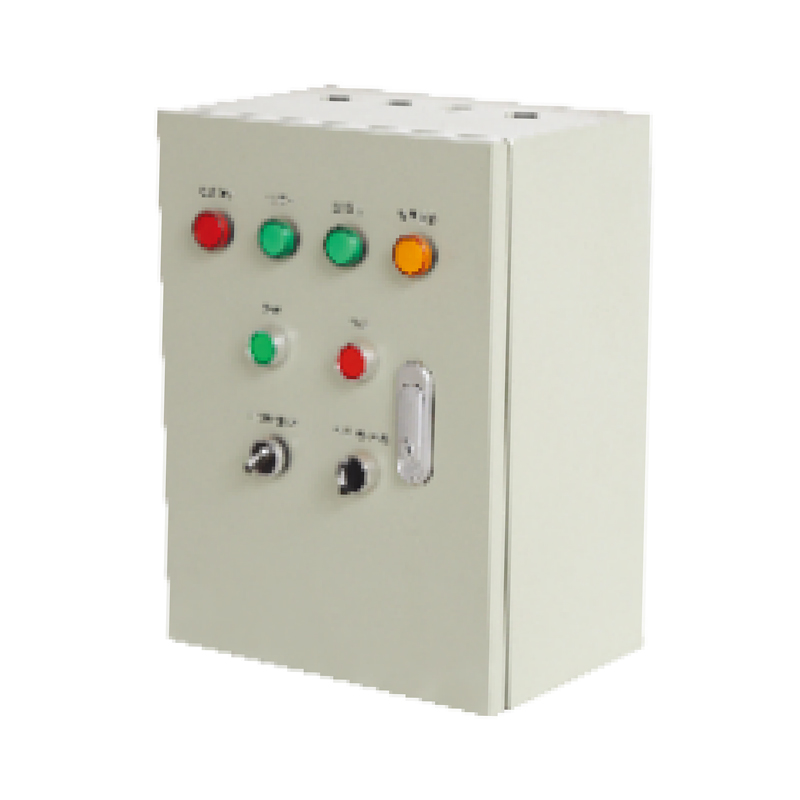
Reduced-Voltage Methods
A star-delta Water Pump Control Cabinet connects the motor windings in star for the run-up and switches to delta once the motor has gained speed. Star connection cuts the starting current to roughly one third of the direct figure, though it also cuts torque by the same proportion. That suits pumps that run up with little load, such as those with a closed valve, and it suits moderate motor sizes. A short jolt can occur at the moment of switchover.
An auto-coupling Water Pump Control Cabinet uses an autotransformer with voltage taps. The motor receives a reduced voltage at switch-on and then full voltage after a set delay. The chosen tap sets the balance between current reduction and available torque, so the cabinet can be matched to the supply and the pump load. This reduced-voltage pump control panel suits larger motors that star-delta cannot handle gently.
Variable Speed for Constant Pressure
A variable frequency drive does more than soften switch-on: it keeps the pump running at the speed that demand requires. In a constant-pressure water supply, a pressure sensor feeds the drive, and the drive raises or lowers pump speed to hold the set pressure while taps open and close.
Energy savings follow from the pump affinity laws. Power drawn falls roughly with the cube of speed, so a pump running 20 percent slower uses about half the power. In buildings with changing demand through the day, that difference adds up over a year. A Water Pump Control Cabinet with a drive also holds pressure steady, which means fewer complaints from users on upper floors.
With more than one pump, a PLC sequences them. It brings pumps in and out as flow changes and alternates the duty pump so that each one wears evenly. If one pump fails, the controller shifts the load to the others.
Protection Inside the Cabinet
A pump station often sits in a damp, dusty pit or shed, and a Water Pump Control Cabinet has to protect both the motor and itself. Typical protections include:
- thermal overload protection against sustained overcurrent;
- short-circuit protection that disconnects the circuit within milliseconds;
- motor protection relays that watch current balance and trip on abnormal conditions;
- dry-run protection, which stops a pump that is turning without water, since running dry overheats the seals within minutes.
The enclosure rating matters because moisture and dust attack contactors and terminals. A cabinet in an outdoor drainage station needs a higher ingress protection level than one in a clean plant room. A well-built pump starter cabinet keeps its components dry and cool, and uses ventilation or filters where heat builds up.
Monitoring Without a Site Visit
Water supply, drainage and irrigation stations are often unattended. A cabinet with a touchscreen or remote link shows pump status, pressure, flow and energy use, and it can send an alarm when something changes. Operators at a municipal control room can then see which pump tripped and why, without driving to the site.
The record kept by the cabinet is often the only witness to what happened overnight. A log that shows a pressure drop, a dry-run trip and a restart gives maintenance crews a starting point for the repair, and a Water Pump Control Cabinet with that record saves hours of diagnosis the next morning.