
 Eng
 English
 русский
 عربى
A Multistage Deep Well Submersible Electric Pump operates in an environment where water quality can affect both material durability and operating conditions. Groundwater contains different levels of dissolved minerals, salts and suspended particles depending on the aquifer and surrounding geology. These substances can contribute to corrosion, mineral deposits and mechanical wear during long periods of operation. For deep well pumping systems, understanding these conditions is an important part of equipment selection. OUMAN Mechanical & Electrical Co., Ltd. in Wenling, Zhejiang, produces several deep well pump series that address different water conditions and pumping requirements.
Groundwater Quality Varies Between Wells
Two wells in the same region may not contain exactly the same water. Geological formations influence mineral content, while coastal locations may have higher salt concentrations. Some groundwater sources are also slightly acidic or contain suspended sand and other particles.
These differences affect pump operation in several ways. Dissolved minerals can accumulate on internal surfaces, while saline or acidic water may accelerate corrosion in unsuitable materials. Suspended particles create another concern because they pass through the pump along with the water and can gradually wear internal components. For a Multistage Deep Well Submersible Electric Pump, these conditions are worth considering before installation.
Water analysis provides useful information about mineral content, acidity and suspended solids, helping determine which materials and pump construction are appropriate for the well.
Mineral Deposits and Material Selection
Mineral accumulation is a common concern in groundwater systems. When water containing dissolved minerals passes through a pump, deposits may gradually form on impellers and other internal surfaces. Over time, these deposits can affect the water passages and interfere with normal pumping performance.
Material selection also matters when groundwater contains corrosive substances. Stainless steel is widely used in pumping equipment because of its corrosion resistance, although different stainless steel grades offer different levels of protection against specific chemical conditions. The actual water composition therefore remains an important consideration when selecting a Multistage Deep Well Submersible Electric Pump.
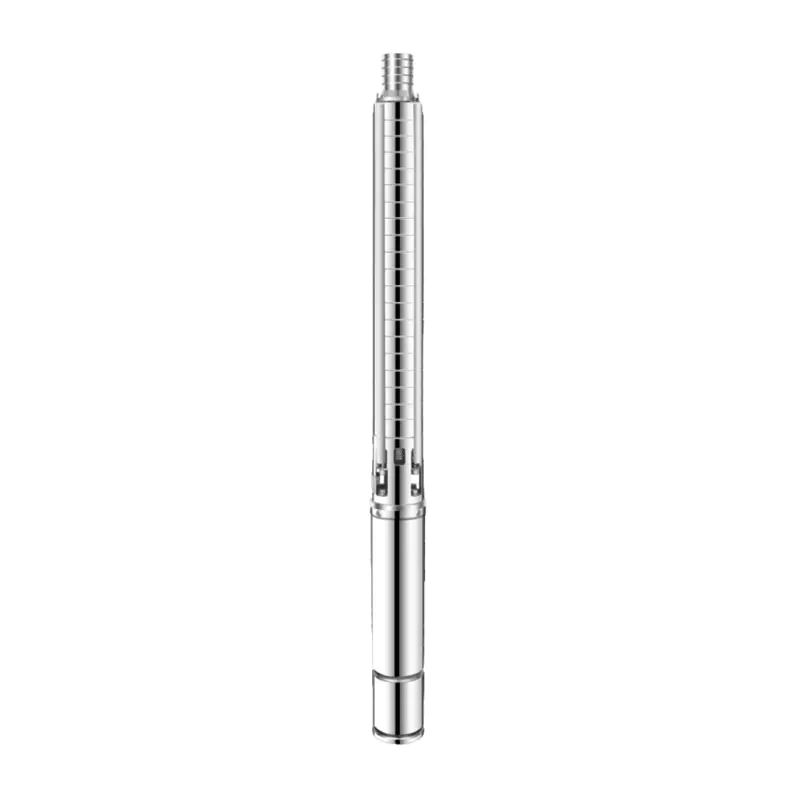
OUMAN's 4SP/6SP Stainless Steel Deep Well Pump uses stainless steel or other corrosion-resistant alloys for its impeller, pump body and motor. The series is intended for water conditions involving rust, scaling, salinity or slight acidity. Its multistage construction arranges impellers in series, with each stage contributing additional pressure for applications requiring high head and steady water delivery.
How Suspended Particles Affect Pump Wear
Mineral deposits are not the only concern in groundwater. Sand and other suspended particles can enter a pumping system and move through its internal passages. Repeated contact with these particles may gradually wear impellers and other components, particularly when water contains a considerable amount of abrasive material.
This issue is relevant to multistage pumps because water passes through multiple impeller and guide-vane stages before reaching the outlet. The condition of these internal passages can influence long-term operation. Evaluating suspended particle content and considering suitable water treatment or filtration arrangements can help reduce unnecessary wear.
The QJD/QJ Deep Well Pump from OUMAN uses cast iron construction together with corrosion-resistant motor and impeller components and wear-resistant construction. It is primarily intended for large-volume irrigation, with municipal water supply and industrial dewatering among its other applications. These operating requirements differ from those of a Multistage Deep Well Submersible Electric Pump selected specifically for saline or slightly acidic groundwater.
Submerged Motors and Operating Protection
Water quality is only one factor affecting deep well pump operation. Motor protection and operating conditions also deserve attention because the equipment remains below the water surface during normal use. Once installed, the motor and pump cannot be inspected as easily as surface-mounted equipment.
The three deep well pump lines from OUMAN use submersible electric motors with sealed construction. The Multistage Deep Well Diving Electric Pump features a high-efficiency motor and automatic overload protection, which shuts the pump down if current or temperature becomes excessive. The QJD/QJ series also includes built-in thermal overload protection to stop operation when excessive heat is detected.
For a Multistage Deep Well Submersible Electric Pump, these protective functions are particularly relevant during extended pumping periods. Appropriate operating conditions, electrical protection and regular attention to changes in water output all contribute to managing equipment operation after installation.
Matching Pump Construction to Well Conditions
Pump selection involves several factors that need to be considered together. Water chemistry helps determine material requirements, while suspended particles affect wear considerations. Required flow, delivery head and the intended application further influence the choice of pump structure.
For example, wells with saline or slightly acidic water may call for the corrosion-resistant construction used in OUMAN's 4SP/6SP series. Large-volume irrigation and municipal supply have different operating priorities, which are addressed by the QJD/QJ series. The Multistage Deep Well Diving Electric Pump serves deep well extraction and water delivery to elevated tanks and reservoirs.
These differences show why selecting a Multistage Deep Well Submersible Electric Pump should involve more than comparing flow and head figures. Water composition, internal material selection and motor protection all contribute to the evaluation. OUMAN's product documentation also includes utility model patent certificates, an invention patent, quality and occupational health and safety management system certifications, and an energy efficiency label certificate from the China National Institute of Standardization, providing additional reference information when evaluating its pump range.